




Dick Van Dyke is one of the rare entertainers whose career has stretched across generations without losing its charm or relevance. Known for his bright screen presence, physical comedy, and musical talent, he became a defining figure in American television and film. From early Broadway success to unforgettable roles in The Dick Van Dyke Show and Mary Poppins, his journey reflects the evolution of modern entertainment itself.
What makes his story especially compelling is not just the fame he achieved, but the consistency of his craft. Even in advanced age, he continues to be recognized as a symbol of energy, humor, and longevity in Hollywood.
Dick Van Dyke Early Life and the Start of a Performance Career
Dick Van Dyke was born Richard Wayne Van Dyke on December 13, 1925, in West Plains, Missouri, and grew up in Danville, Illinois. His early life was far removed from Hollywood glamour. Before he became a household name, he explored several ordinary jobs, including working in radio and briefly attempting to run a small advertising business.
That business venture did not succeed, but it pushed him back toward entertainment, where he had always shown natural talent. Radio work gave him confidence in voice performance, while early stage appearances helped him understand timing and audience reaction. These early experiences became the foundation for his later success, especially his ability to combine speech, movement, and humor in a seamless way.
Dick Van Dyke Broadway Success and the First Big Break
His first major breakthrough came in the early 1960s with the Broadway production Bye Bye Birdie. Van Dyke’s performance was widely praised, and he won a Tony Award for his role. This moment marked a turning point, shifting him from a working performer into a nationally recognized talent.
Broadway also helped refine his physical style of acting. Unlike many performers who relied heavily on dialogue, Van Dyke used movement and expression as part of his storytelling. This approach would later define his most famous screen roles, especially in television comedy where timing and physical expression were essential.
Dick Van Dyke Television Fame and The Dick Van Dyke Show
In 1961, Dick Van Dyke became a television star with The Dick Van Dyke Show, created by Carl Reiner. The series followed a comedy writer navigating both professional and personal life, blending workplace humor with domestic situations in a way that felt fresh for its time.
What set the show apart was Van Dyke’s natural performance style. He played Rob Petrie with a mix of awkwardness, warmth, and precise physical comedy. His ability to turn simple movements into humor made the character feel real rather than scripted. The show quickly became one of the most influential sitcoms of its era and ran until 1966, earning multiple awards and long-lasting cultural recognition.
Even today, many television writers and comedians look back at the series as a model for character-driven comedy. It proved that humor could come from everyday situations rather than exaggerated setups.
Film Stardom with Mary Poppins and Musical Roles
Dick Van Dyke’s transition to film brought him international fame. His role as Bert in Disney’s Mary Poppins in 1964 remains one of the most iconic performances in family entertainment history. Acting alongside Julie Andrews, he combined singing, dancing, and acting in a way that felt effortless and joyful.
Although his accent in the film has often been discussed, it did little to affect the film’s success. Instead, audiences connected with his energy and physical performance, which brought a lively contrast to the film’s magical tone. The role helped define Disney’s live-action musical era and remains one of its most beloved productions.
He continued his musical film success with Chitty Chitty Bang Bang in 1968. While the film had a different tone, it once again showcased his ability to carry musical storytelling with charisma and movement. These performances established him as one of the most recognizable musical actors of his time.
Television Return and Continued Acting Work
Unlike many actors who step away from the spotlight, Dick Van Dyke remained active for decades after his early peak. In the 1990s, he returned to television in Diagnosis: Murder, where he played Dr. Mark Sloan, a physician who often solved crimes alongside his son, played by Barry Van Dyke.
The series allowed him to combine mystery storytelling with light humor, showing that his screen presence still worked for modern audiences. It also introduced him to a younger generation who may not have seen his earlier work.
In later years, he made guest appearances in films and television shows, often embracing roles that reflected his legacy. These appearances were not about reinvention but continuity, reinforcing his status as a long-standing figure in entertainment.
Awards, Recognition, and Industry Respect
Over the course of his career, Dick Van Dyke has received some of the highest honors in entertainment. His awards include Emmy Awards for television work, a Grammy Award for musical performance, and a Tony Award for Broadway. Very few performers achieve recognition across all three major entertainment platforms.
He has also been honored with lifetime achievement awards and national recognition for his contribution to American culture. These acknowledgments reflect not just popularity, but sustained influence across multiple generations of performers and audiences.
His career is often studied in entertainment history because it bridges several eras, from early television production to modern digital media appearances.
Longevity, Public Life, and Modern Recognition
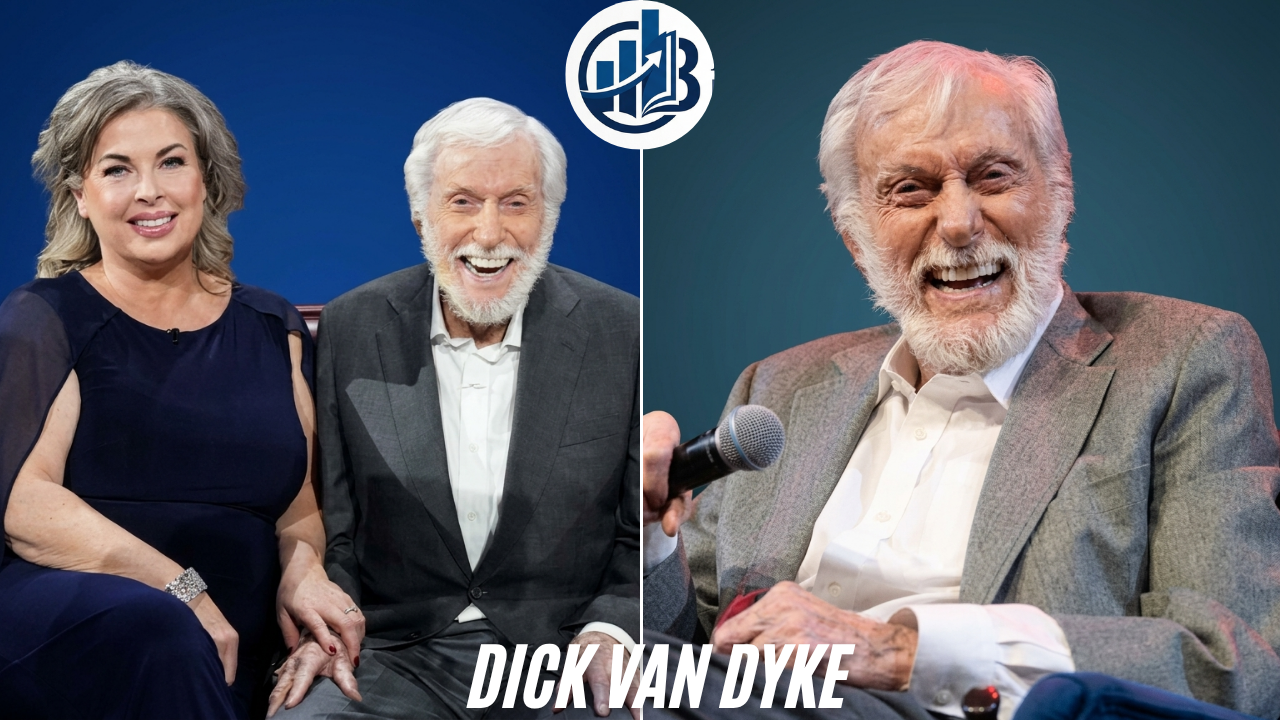
One of the most remarkable aspects of Dick Van Dyke’s life is his longevity. Living into his late 90s and beyond, he has remained active in public life, attending events, participating in interviews, and occasionally appearing in entertainment projects.
His later years have drawn attention not just because of his age, but because of his continued energy and engagement. He has often spoken about staying active and maintaining a positive outlook, which has contributed to his public image as a symbol of aging with vitality.
Media coverage in recent years has frequently highlighted his milestone birthdays and public appearances, reflecting ongoing admiration from both fans and industry professionals.
Legacy in Entertainment History
Dick Van Dyke’s influence on entertainment is deeply rooted in his ability to blend physical comedy, musical performance, and relatable character work. His style helped shape how television sitcoms developed during the 1960s and beyond, especially in balancing humor with everyday life.
In film, his musical roles helped define a generation of family-friendly entertainment that continues to be watched across decades. His performances remain widely referenced, not just for nostalgia but for their technical skill and emotional warmth.
What makes his legacy particularly strong is its accessibility. His work does not rely on complex themes or heavy interpretation. Instead, it connects through movement, timing, and emotion, making it easy for audiences of all ages to appreciate.
Conclusion
Dick Van Dyke’s career represents more than long-term success in Hollywood. It reflects adaptability, consistency, and a deep understanding of performance as both craft and communication. From early stage roles to iconic film characters and television breakthroughs, he has remained a constant presence in American entertainment history.
Even today, his influence is visible in comedy, musical performance, and television storytelling. His work continues to be rediscovered by new audiences, proving that strong performance does not fade with time.
His story stands as a reminder that longevity in entertainment is not just about staying visible, but about remaining meaningful across changing eras of culture and media.