






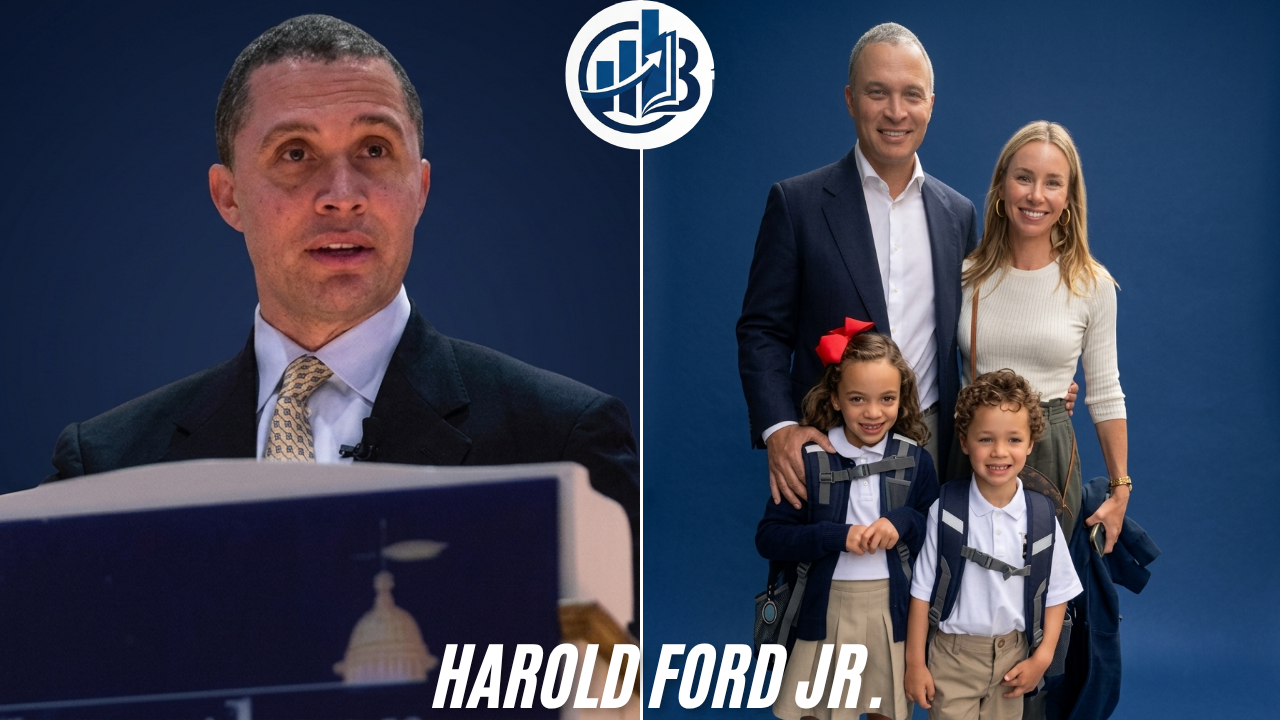
Harold Ford Jr. is a well-known American political figure, former U.S. Congressman, and media commentator whose career has moved across politics, finance, and television. His name is often associated with a younger generation of political leadership that emerged in the late 1990s and early 2000s. Over time, he has transitioned from elected office into corporate and media roles, where he continues to participate in national political conversations.
His journey reflects how modern political careers often extend beyond government service, shaping influence through business and broadcast platforms rather than only through legislation.
Early Life and Family Background
Harold Ford Jr. was born into a prominent political family in Memphis, Tennessee. His father, Harold Ford Sr., served as a long-time U.S. Congressman and was the first African American to represent Tennessee in the House of Representatives. Growing up in this environment exposed Ford Jr. to public service and political discussion from an early age.
His upbringing was shaped by both Memphis and Washington, D.C., as his father’s congressional career placed the family close to national politics. This dual environment gave him early insight into how political systems operate at both local and federal levels.
Ford attended St. Albans School in Washington, D.C., a private preparatory school known for educating students who often move into leadership roles. He later went on to the University of Pennsylvania, where he studied American history. After completing his undergraduate education, he earned a law degree from the University of Michigan.
These academic experiences strengthened his understanding of law, governance, and public policy, preparing him for a future in national politics.
Entry Into Politics and Rapid Rise
Harold Ford Jr. entered politics at a young age, stepping into the national spotlight in 1996 when he ran for the U.S. House of Representatives in Tennessee’s 9th Congressional District. He won the seat and took office in 1997, becoming one of the youngest members of Congress at the time.
His early political career was marked by a moderate Democratic approach. He often positioned himself as part of the centrist wing of the party, supporting fiscal responsibility while also advocating for social programs and civil rights. This balance helped him appeal to a broad range of voters in his district.
Ford quickly gained attention in Washington, not only because of his age but also because of his family legacy and polished public speaking style. He was chosen to deliver a keynote address at the 2000 Democratic National Convention, a moment that signaled his growing influence within the party.
Years in Congress and Political Identity
During his time in Congress, Ford served multiple terms and built a reputation as a pragmatic lawmaker. He participated in several committees and worked on issues related to economic development, financial regulation, and social policy.
His political identity remained centered on moderation. He often sought common ground between Democrats and Republicans, especially on economic issues. This approach sometimes placed him in a difficult position, as he faced pressure from both progressive and conservative critics.
Despite these challenges, Ford remained a consistent electoral presence in his district for nearly a decade. His ability to maintain voter support reflected both his personal brand and the strength of his local political network.
2006 Senate Campaign and Turning Point
A major shift in Ford’s career came in 2006 when he decided to run for the U.S. Senate in Tennessee. This decision required him to leave his House seat and pursue a statewide campaign against Republican candidate Bob Corker.
The race was closely watched and highly competitive. Ford won the Democratic nomination but ultimately lost the general election. That defeat marked the end of his tenure in elected office.
The Senate campaign is often seen as a turning point in his career. After leaving Congress, he did not return to electoral politics, instead choosing to move into private sector and media roles.
Career in Finance and Corporate Leadership
After leaving government service, Harold Ford Jr. transitioned into the financial sector. He worked in senior positions at major financial institutions, including Morgan Stanley, where he focused on strategic advisory and institutional relations.
In this phase of his career, Ford became involved in discussions around markets, policy, and economic trends from a business perspective rather than a legislative one. His background in Congress made him a valuable voice in corporate environments, especially on issues where politics and economics overlap.
He also remained connected to academic and policy communities through guest lectures and public speaking engagements. This helped him maintain a presence in discussions about governance and economic policy.
Media Career and Public Commentary
Ford later expanded his career into television and political commentary. He appeared on major news networks such as MSNBC, CNN, and CNBC, offering analysis on elections, policy debates, and national political developments.
His visibility increased further when he joined Fox News as a contributor. He became part of the network’s political discussion programs, including appearances on The Five, where he debates current events alongside other commentators.
His role in media is often seen as that of a centrist voice. He is known for presenting arguments from multiple perspectives, which reflects his earlier political style in Congress. This position has made him a recognizable figure in American political commentary, especially during election cycles.
Public Image and Political Perspective
Over the years, Harold Ford Jr. has developed a public image shaped by adaptability. He is no longer defined solely as a former congressman but as someone who moves between politics, finance, and media.
Some observers view his career as an example of how modern political figures extend their influence beyond government. Others see his shift into media as part of a broader trend where former lawmakers become public commentators.
What remains consistent is his engagement with national political dialogue. Whether through television or professional roles, he continues to participate in discussions about policy and governance.
Personal Life and Current Work
Harold Ford Jr. is married and lives in New York City with his family. Alongside his media work, he continues to be involved in financial and advisory roles.
His current public presence is primarily through television appearances and commentary on political developments. This combination of media and business work reflects the hybrid nature of many modern post-congressional careers.
Conclusion
Harold Ford Jr.’s career shows how political influence can evolve beyond elected office. Starting as one of the youngest members of Congress, he built a reputation as a moderate Democrat with a national profile. After leaving politics, he transitioned into finance and media, where he continues to shape public discussion.
His journey reflects a broader shift in American public life, where political experience often leads into corporate and media platforms. Ford’s continued visibility suggests that while his role has changed, his connection to political discourse remains strong.
He stands as an example of how public figures adapt their careers across changing political and media landscapes, maintaining relevance through new forms of engagement.
businesssmagazine.net