







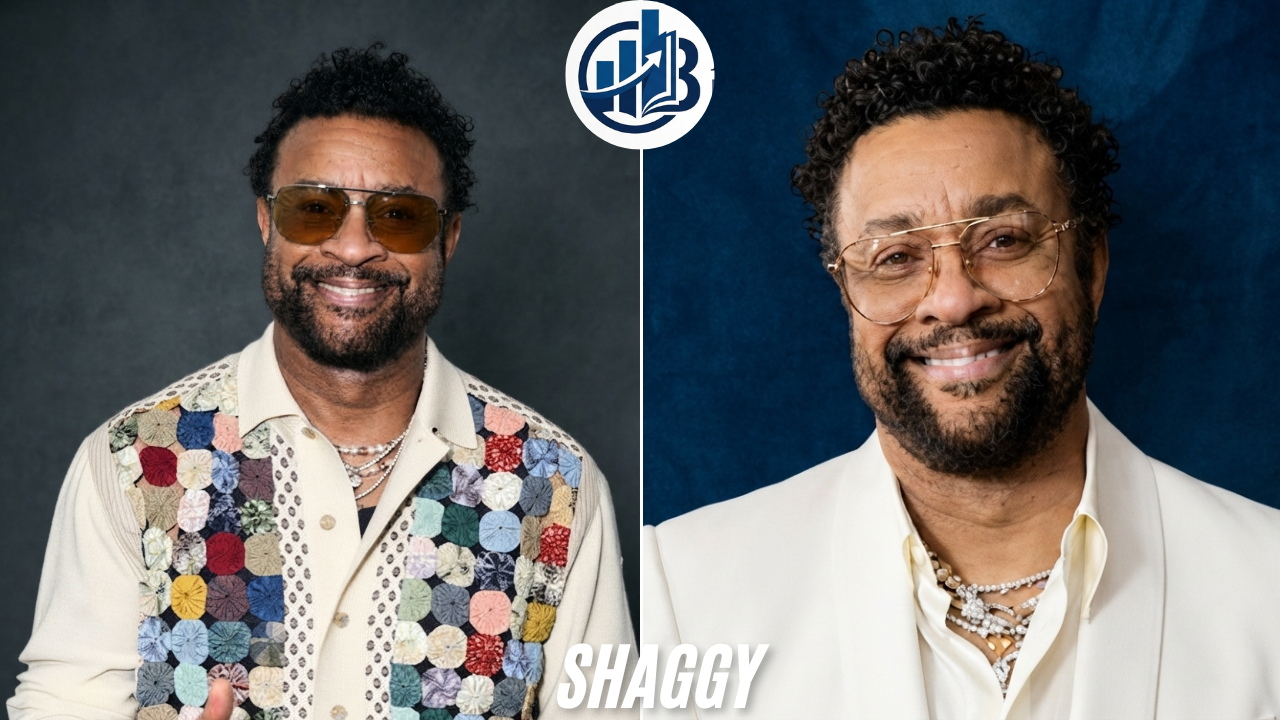
Shaggy is one of the few artists from the Caribbean who managed to turn a distinctive regional sound into a worldwide pop identity without losing its core character. Known for his deep voice, playful delivery, and fusion of reggae and dancehall with mainstream pop production, he built a career that has lasted for decades and continues to resonate across generations.
His music is often recognized instantly, even by listeners who may not know his real name. Behind that voice is Orville Richard Burrell, an artist whose journey moved from Kingston, Jamaica to Brooklyn, New York, and eventually to the biggest stages in global music.
Early Life in Jamaica and Move to New York
Shaggy was born in Kingston, Jamaica, in 1968, a city where music is not just entertainment but part of daily life. Growing up in that environment exposed him early to reggae rhythms, sound system culture, and street performances that shaped much of his artistic foundation.
During his teenage years, he moved with his family to New York City. That transition marked a major turning point in his life. Brooklyn in the 1980s was a melting pot of Caribbean culture and emerging hip-hop influence, and this blend played a key role in shaping his future sound.
The shift from Kingston to New York also gave him a dual identity. He was deeply connected to Jamaican musical traditions, but at the same time, he was living in a city that constantly reinvented global music trends.
Military Service and the Making of His Voice
Before fully committing to music, Shaggy served in the United States Marine Corps. His service period included deployment during the Gulf War era. While music was not his main focus at the time, this chapter of his life became an unexpected influence on his artistic style.
It was during these years that he developed and refined his signature vocal tone. The deep, rough delivery that later became his trademark was shaped partly through discipline, performance training, and the physical demands of military life.
After completing his service, he returned to New York with a clearer sense of direction. The music scene was competitive, but he had already begun building a sound that stood out from the crowd.
Breakthrough with Oh Carolina
Shaggy’s first major breakthrough came in the early 1990s with the track Oh Carolina. The song was based on an earlier Jamaican ska record but reimagined in a dancehall style that felt fresh for international audiences.
The success of Oh Carolina brought him immediate attention beyond the Caribbean and New York underground scene. It was a rare moment where a dancehall track crossed into mainstream recognition without heavy adaptation to pop formulas.
This early hit established him as an artist to watch, and it opened the door for his debut album releases. While his early projects helped refine his sound, it was clear that his biggest success was still ahead.
Boombastic and Global Recognition
The release of Boombastic in 1995 marked a defining moment in Shaggy’s career. The title track became a global hit, reaching audiences across Europe, North America, and beyond. Its success was boosted further when it was featured in a Levi’s advertisement, which gave it massive commercial visibility.
Boombastic showcased what would become Shaggy’s signature formula. His music combined humor, confidence, and catchy rhythms with a voice that was instantly recognizable. The song helped him move from rising artist to international star.
The album also earned critical recognition and contributed to award success, strengthening his position as one of the leading voices in reggae fusion during the mid-1990s.
Shaggy Hot Shot Era and Worldwide Fame
The year 2000 marked the most commercially successful phase of Shaggy’s career with the release of Hot Shot. This album produced two of his most iconic songs, It Wasn’t Me and Angel.
It Wasn’t Me became a global phenomenon. Its storytelling approach, combined with a humorous take on relationship drama, made it stand out in early 2000s pop music. The song topped charts in multiple countries and became one of the most recognizable tracks of its time.
Angel followed with similar success, reinforcing Shaggy’s ability to blend reggae rhythms with pop-friendly melodies. During this period, he was not just a reggae artist but a global pop figure whose songs were played across radio stations worldwide.
Musical Style and Lasting Influence
Shaggy’s musical style is built on a fusion of reggae, dancehall, and pop production. What makes his work distinctive is not just the rhythm, but the personality in his voice and delivery. He often uses storytelling, humor, and conversational lyrics that make his songs feel direct and relatable.
His success helped open doors for other Caribbean artists in global markets. At a time when reggae fusion was still finding its place in mainstream music, Shaggy demonstrated that the genre could achieve both commercial success and cultural authenticity.
Even as music trends shifted over the years, his core style remained recognizable. That consistency helped him maintain relevance long after his biggest chart peaks.
Collaborations and Continued Career
Beyond his solo work, Shaggy has collaborated with a wide range of artists across genres. One of his most notable partnerships was with Sting, which resulted in the Grammy-winning project 44/876.
These collaborations show his adaptability and willingness to experiment without abandoning his musical identity. He has continued releasing music, performing internationally, and working with new artists, ensuring his presence in the industry remains active.
His later career also reflects a shift from pure commercial focus to broader artistic exploration, including cross-genre projects and live performances that highlight his long catalog of hits.
Shaggy Personal Life and Philanthropy
Outside of music, Shaggy has maintained a relatively private personal life. He is married and has children, and he often keeps his family out of the public spotlight.
He is also known for his charitable work, particularly in Jamaica. Through his foundation efforts, he has supported healthcare initiatives, including contributions to children’s hospitals. This aspect of his life reflects a strong connection to his home country and a desire to give back beyond the music industry.
Shaggy Legacy in Global Music
Shaggy’s legacy is tied to his role in bringing reggae fusion into mainstream global culture. He helped shift perceptions of Caribbean music from niche genre to international chart presence.
What makes his career notable is its longevity. Many artists experience brief peaks, but Shaggy has managed to remain relevant across multiple decades by evolving his sound while maintaining a consistent identity.
His influence can still be heard in modern pop and dancehall crossovers, where storytelling, rhythm, and vocal style often echo the formula he helped popularize.
Frequently Asked Questions
Who is Shaggy?
Shaggy is the stage name of Orville Richard Burrell, a Jamaican-American reggae and dancehall artist known for global hits like It Wasn’t Me and Boombastic.
What is Shaggy’s real name?
His real name is Orville Richard Burrell.
What is Shaggy most famous for?
He is most famous for his international hit songs and his unique blend of reggae, dancehall, and pop music.
Did Shaggy serve in the military?
Yes, he served in the United States Marine Corps before fully starting his music career.
What are Shaggy’s biggest songs?
His biggest songs include Oh Carolina, Boombastic, It Wasn’t Me, and Angel.
Is Shaggy still active in music?
Yes, he continues to perform, record music, and collaborate with artists globally.
Conclusion
Shaggy’s career shows how far a distinctive voice and consistent artistic identity can travel. From his early life in Kingston to international chart dominance, his journey reflects both cultural heritage and global appeal.
His music continues to reach new audiences, not because it follows trends, but because it stays true to a style that is instantly recognizable. That balance between authenticity and accessibility is what has kept his work alive for decades.
Even today, his influence remains part of the global music conversation, especially whenever reggae and pop intersect.