







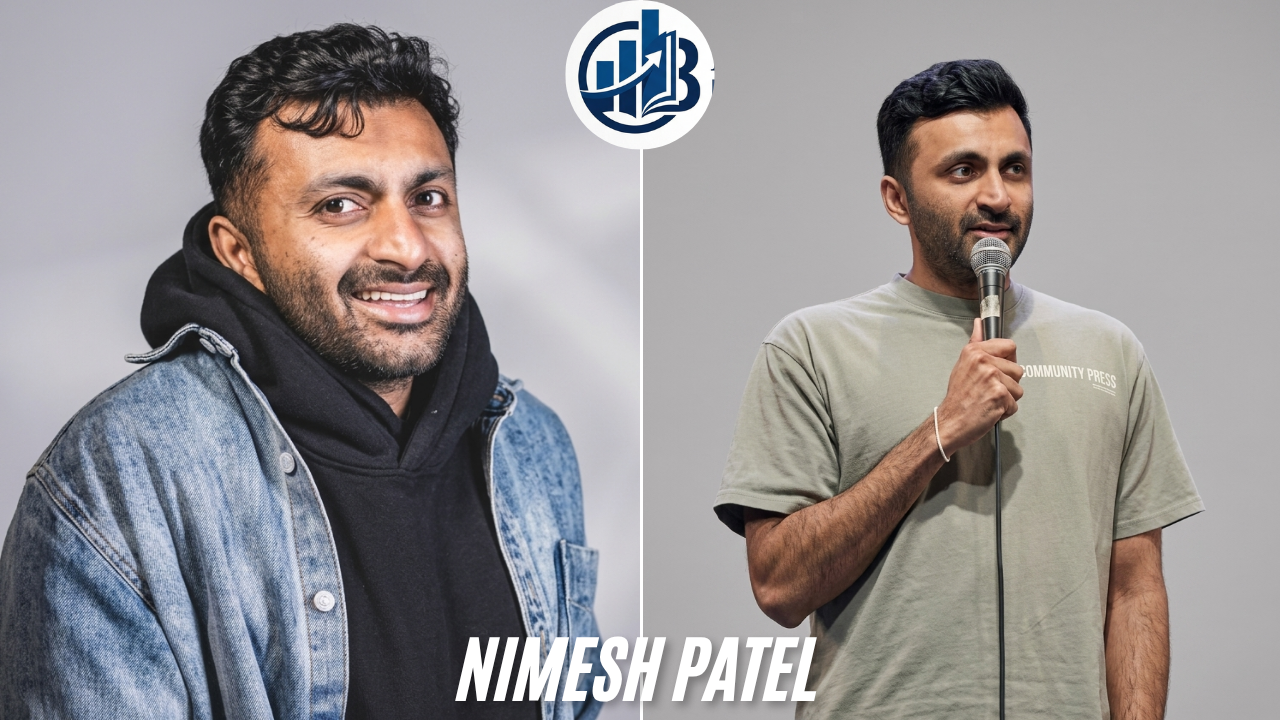
Nimesh Patel is an American stand-up comedian and television writer whose career has moved between high-profile TV writing rooms and packed comedy clubs across the United States. Born in New Jersey to a Gujarati Indian immigrant family, he built his reputation through sharp observational comedy and later through writing for some of the biggest names in American entertainment.
His name often comes up in searches because of his work on Saturday Night Live, his connection to Chris Rock, and his growing catalog of stand-up specials that circulate widely on YouTube. But his story is less about a single breakthrough and more about steady movement through different corners of the comedy industry.
Nimesh Patel Early Life in New Jersey and Education Path
Nimesh Patel was born in 1986 in Parsippany, New Jersey. He grew up in a first-generation Indian-American household, something he later draws on heavily in his stand-up material. His parents immigrated from India in the 1970s, working ordinary jobs before building financial stability in the United States.
He attended Parsippany Hills High School and later went to New York University. At NYU, he initially pursued pre-med before switching to finance, eventually graduating in 2008. That academic shift is often mentioned in profiles because it contrasts sharply with his eventual entry into comedy.
Like many comedians in New York, Patel did not enter entertainment through a traditional route. After college, he worked regular jobs during the day and performed at night in small comedy clubs, slowly building timing and confidence on stage.
Nimesh Patel Starting Out in Comedy and the Chris Rock Break
Patel’s early stand-up years were spent in New York’s club circuit, especially open mics and smaller venues where new comics test material in front of unpredictable audiences. His writing style began to stand out for its precision and structure rather than pure improvisation.
A major turning point came in 2015 when Chris Rock saw him perform in Brooklyn. That moment led to Patel being brought onto Rock’s writing team for the 2016 Academy Awards. It was his first major professional writing job and placed him inside a high-pressure, elite comedy environment.
From there, he continued building momentum. He wrote material connected to major comedy projects, including contributions around political and award-show comedy formats. This period helped him move from local performer to industry-recognized writer.
Nimesh Patel Saturday Night Live and Industry Recognition
In 2017, Patel joined Saturday Night Live as a writer. His work focused largely on Weekend Update, the segment known for fast-paced, topical jokes about politics, culture, and news events.
His hiring was notable for another reason: he became the first Indian-American writer in the show’s history. That milestone is frequently referenced in profiles of his career, not just as a personal achievement but as part of the broader diversification of American comedy writing rooms.
His time at SNL lasted roughly one season, but it was impactful. He earned a Primetime Emmy nomination in 2018 as part of the writing team, an important credential in television comedy. While he did not remain long-term at the show, the experience helped solidify his reputation as a writer capable of working at the highest level of network television.
Transition Back to Stand-Up Comedy
After leaving SNL, Patel shifted his focus back to stand-up, where he had more creative control over his material and performance style. This move is common among TV writers who want a direct relationship with audiences rather than working behind the scenes.
He began releasing comedy specials online, including titles such as “Thank You China,” “Lucky Lefty,” and “Jokes to Get You Through Quarantine.” These specials gained strong traction on YouTube and streaming platforms, helping him build a large digital audience without relying on traditional distribution channels.
His material often focuses on identity, relationships, and everyday cultural contradictions. Rather than broad physical comedy, his approach leans heavily on writing structure, setup precision, and controlled delivery. That style has helped him maintain consistency across both live shows and recorded specials.
Touring, Audience Growth, and Public Attention
Today, Patel is primarily active as a touring comedian, performing across major U.S. cities and theater venues. His shows regularly sell out mid-to-large sized rooms, reflecting a steady rise in demand over the past several years.
He has also been highlighted in industry lists and media coverage as a comedian to watch, particularly because of how effectively he uses digital platforms to grow his audience. Unlike older comedy models that relied heavily on television exposure, Patel’s career reflects a hybrid path between stage performance and online distribution.
His public profile has also been shaped by occasional controversy during live performances, where audience reactions have sometimes sparked debate about comedy boundaries. These moments, while not defining his work, have contributed to broader discussions about stand-up in university and public settings.
Comedy Style and Audience Appeal
Patel’s comedy style is often described as observational and tightly written. He tends to avoid loose storytelling and instead builds structured jokes that rely on timing and layered setups. This makes his material accessible while still being detail-driven.
His audience appeal largely comes from relatability and cultural specificity. Many of his jokes explore the experience of growing up between Indian household expectations and American social norms, a theme that resonates widely with second-generation immigrant audiences.
He also benefits from a strong digital presence, where clips of his sets circulate quickly and introduce new viewers to his longer performances.
Current Direction in His Career
As of recent years, Patel continues to expand his touring schedule and release new material independently. He remains active in stand-up clubs as well as larger theaters, balancing grassroots comedy spaces with national-level shows.
His career direction suggests a continued focus on live performance rather than returning to full-time television writing. That said, his background in TV comedy remains an important part of his identity as a writer-performer hybrid.
What stands out most is consistency. He has maintained visibility across changing comedy formats, from traditional TV writing rooms to digital-first specials and live touring circuits.
Frequently Asked Questions
Who is Nimesh Patel?
Nimesh Patel is an American stand-up comedian and former television writer known for his work on Saturday Night Live and his independent stand-up specials.
What is Nimesh Patel famous for?
He is best known for being a Saturday Night Live writer, working with Chris Rock on the Academy Awards, and releasing popular stand-up specials online.
Did Nimesh Patel work on SNL?
Yes, he joined Saturday Night Live in 2017 as a writer and worked primarily on Weekend Update before leaving after about one season.
Where can I watch Nimesh Patel’s comedy?
His stand-up specials are available on YouTube and streaming platforms, and he also performs regularly on national tours.
What is Nimesh Patel’s comedy style?
His style is observational, structured, and writing-focused, often centered on cultural identity and everyday social experiences.
Is Nimesh Patel still performing?
Yes, he continues to tour widely across the United States and release new material through live shows and digital platforms.
Conclusion
Nimesh Patel’s career shows how modern comedy no longer follows a single path. He moved from finance graduate to club performer, from late-night writing rooms to independent touring comedian, building recognition at each stage rather than relying on one breakthrough moment.
His work sits at the intersection of traditional television comedy and the newer digital stand-up ecosystem. That balance has helped him maintain relevance while expanding his audience far beyond club stages.
As his touring continues and his online presence grows, Patel’s trajectory reflects a broader shift in comedy itself—where writers and performers now build careers across multiple platforms at once.